Home brushing is where grooming is actually decided. The salon visit every month or two can only work with the coat that arrives, and the coat that arrives was built by whatever happened in the weeks between. The good news is that effective home brushing is short, undramatic, and specific to coat type. Concord owners do not need a shelf of products. They need the right two tools and a routine matched to the dog in front of them.
| Coat type | Home routine | Tools |
|---|---|---|
| Curly (poodle, doodle, bichon) | Brush to the skin 2 to 3 times a week, section by section | Slicker brush, then a metal comb to verify |
| Long and silky (yorkie, shih tzu, spaniel) | Brush every other day; focus behind ears, chest, and feathering | Pin brush and metal comb |
| Double coat (golden, shepherd, husky) | Brush weekly; daily during spring and fall blow-out | Undercoat rake or shedding tool, slicker |
| Short and smooth (beagle, boxer, lab) | A few minutes weekly to pull loose hair and check skin | Rubber curry brush or bristle brush |
| Wire coat (terriers, schnauzer) | Weekly brush-through; comb furnishings on the legs | Slicker and metal comb |
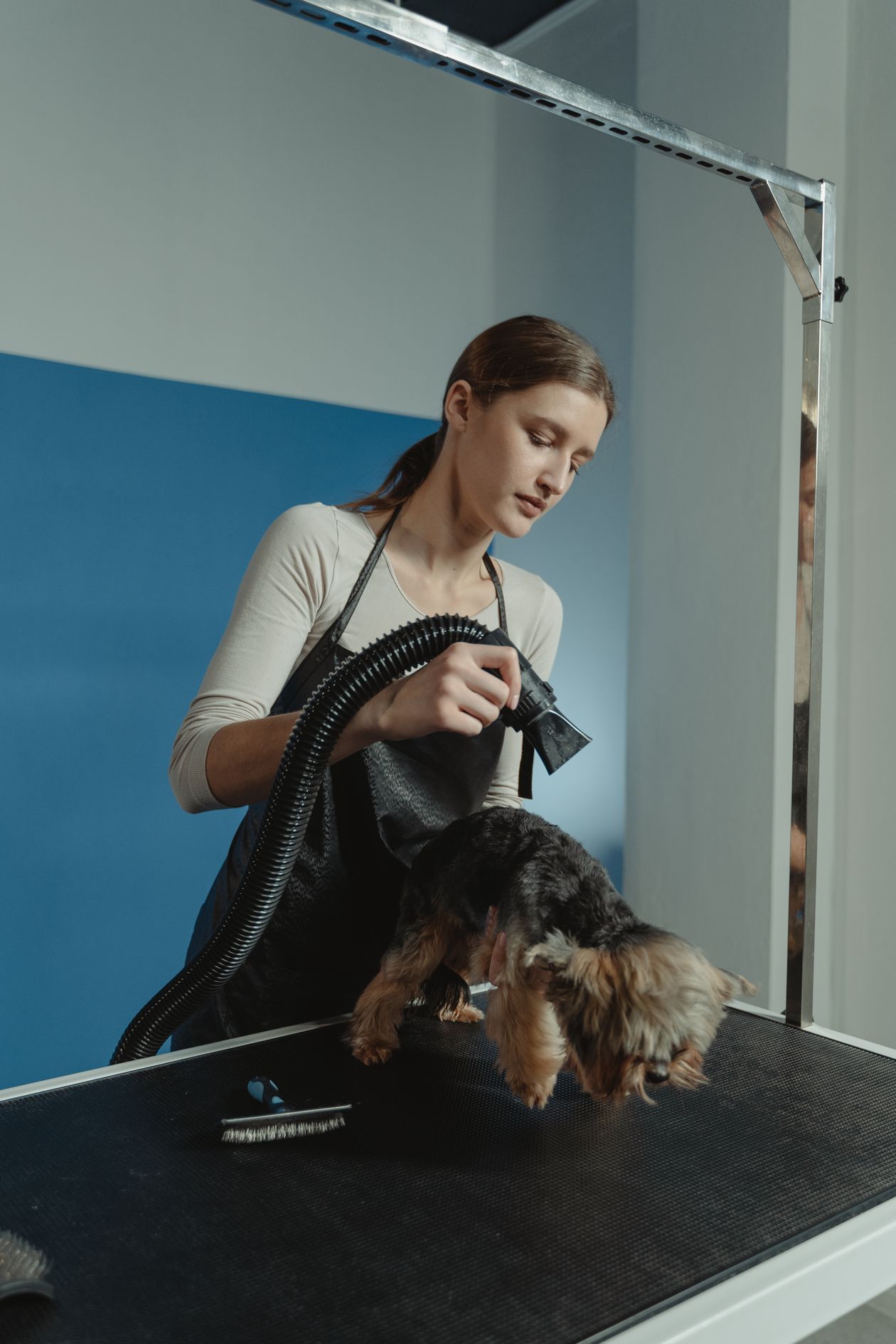
The comb test, which tells the truth
Surface brushing is the most common home grooming illusion: the top of the coat looks smooth while tangles build at the skin. The check is a metal comb drawn gently through the coat down to the skin, especially behind the ears, under the collar, in the armpits, and at the base of the tail. If the comb passes, the dog is brushed. If it catches, that area needs work before it becomes the mat a groomer has to clip out.
Technique that takes ten minutes
Work in sections and brush in layers, lifting the coat and brushing down from the skin outward, rather than skimming the surface. A light mist of water or detangling spray reduces breakage on dry coats. Keep sessions short and end them while the dog is still calm; a cooperative five minutes beats a wrestling match that teaches the dog to hate the brush. Dogs at Barks and Bubbles Salon and Spa whose owners keep this up arrive with coats that can actually be styled, which is the entire point of the appointment.
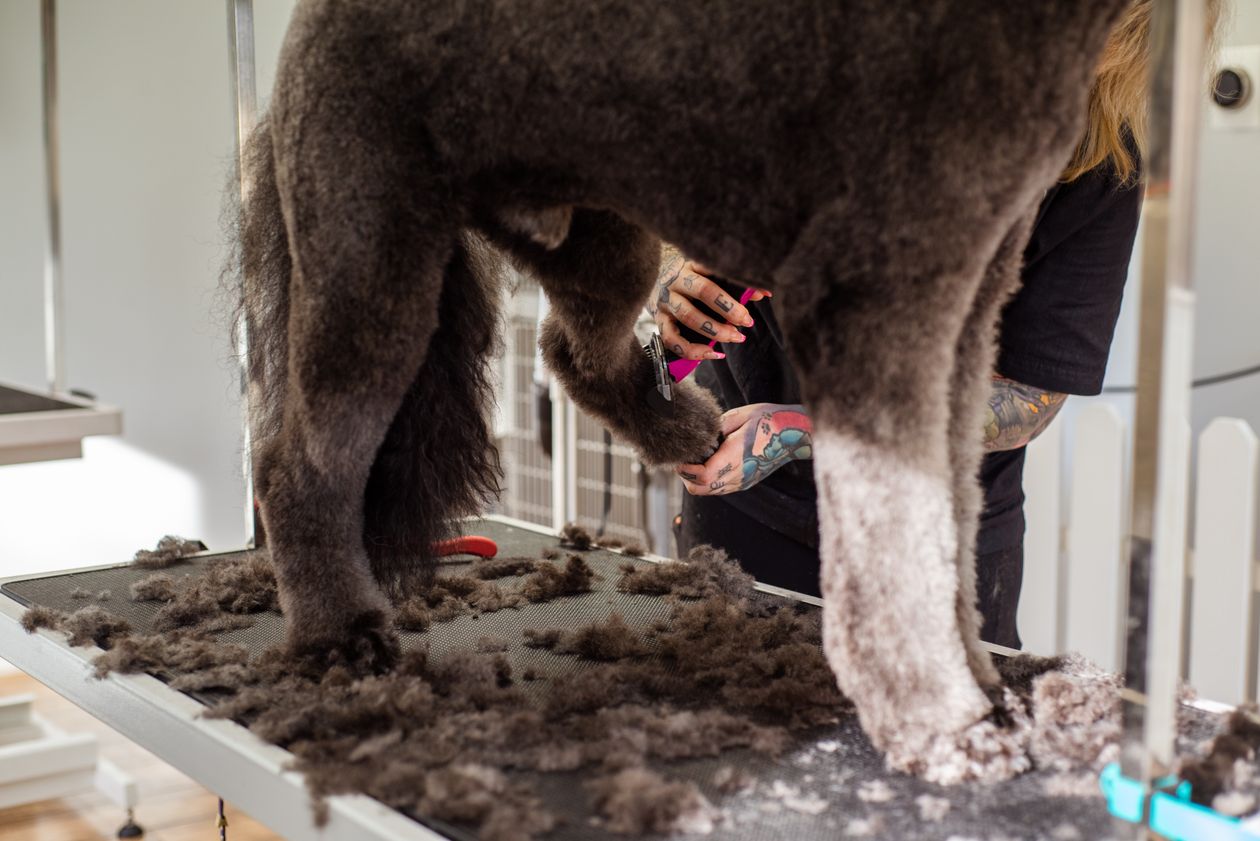
Coaching a dog who fidgets, without a fight
Most brushing battles are schedule problems wearing a disguise. Brush a dog who has just come in from a walk and settled, not one wound up at the door. Work on a non-slip surface at a height that saves your back, keep the first sessions to a few minutes, and pair the job with something the dog values, a lick mat or a stream of small treats delivered by a second person if you have one. Stop while it is going well. Dogs generalize from endings, and a dog whose brushing always ends calmly starts the next session calm. If a particular area triggers real resistance, feet and face are common, leave it for last and keep it brief; your groomer would rather handle one sensitive zone than inherit a dog who fears the whole brush.
Where tangles actually start: a trouble-spot map
Across coat types, tangles follow friction and fineness. Fine hair behind the ears felts first. The collar line mats under constant rubbing, which is why the collar should come off for brushing. Armpits combine fine hair, friction, and moisture, the full recipe. Chest and belly hair catches debris on walks through Piedmont grass and red clay mud, and damp, dirty hair tangles as it dries. Leg feathering and tail furnishings tangle from movement alone. Brushing time is finite, so spend it in that order, trouble spots first, and the easy back and sides with whatever patience remains.
If the routine still is not happening, shrink it rather than abandoning it. Two honest minutes on the trouble spots twice a week outperforms an ambitious Sunday session that occurs monthly and ends in a wrestling match. Groomers can tell at a glance which owners brush a little often and which brush a lot rarely, because the coat keeps the record even when the calendar is optimistic.
Common questions
My dog hates being brushed. What actually helps?
Shorten the sessions, brush after a walk when the dog is settled, pair the brush with treats, and check your technique: most brush-hating dogs are reacting to surface pulling on tangles underneath. Start on easy areas and stop early.
Should I brush before or after a bath?
Before, always for coats that tangle. Water tightens knots. Bathe a brushed-out dog, then dry and brush through again as the coat dries.
Is a shedding tool safe to use weekly on a double coat?
Used lightly as directed, yes during heavy shedding. Aggressive or daily use can cut guard hairs and irritate skin, so the rake-and-slicker combination is the safer default.
Photos in this guide are representative stock images.
← All guides from Barks and Bubbles Salon and Spa← Back to Barks and Bubbles Salon and Spa