Every groomer in Concord knows the conversation. The owner asks for the long coat to be kept, the groomer parts the fur and shows what is underneath, and the appointment turns into a discussion nobody wanted. Mats are the most common source of conflict in grooming because owners see surface fluff and groomers feel what is happening at the skin. Understanding how mats form and what they do makes the groomer's recommendation much easier to hear.
How a mat forms
Loose and dead hair that is not brushed out gets caught in the living coat. Friction points do the rest: behind the ears, under the collar, in the armpits, where a harness rubs, and anywhere a dog gets wet and dries without being brushed. Water is the accelerator, since a wet tangled coat dries tighter than it was, which is why a month of rainy Piedmont walks and unbrushed baths can turn a manageable coat into felt. Tangles weave together, tighten with movement, and end as mats: dense pads sitting directly on the skin.
Why mats are a welfare issue, not a style issue
- Mats pull constantly on the skin, and tight mats on ears can contribute to hematomas when the dog shakes its head.
- Skin under a mat stays damp and unventilated, a setup for irritation, hot spots, and infections that stay hidden until the mat comes off.
- Brushing out a serious mat hurts. Dematting a felted coat can mean long, painful pulling on skin that is already sore.
- Mats hide things: lumps, wounds, parasites, and embedded debris are regularly found under coats owners thought were just untidy.
- A blade must pass under the mat to remove it, close to skin that may already be damaged, which is skilled, slow work.
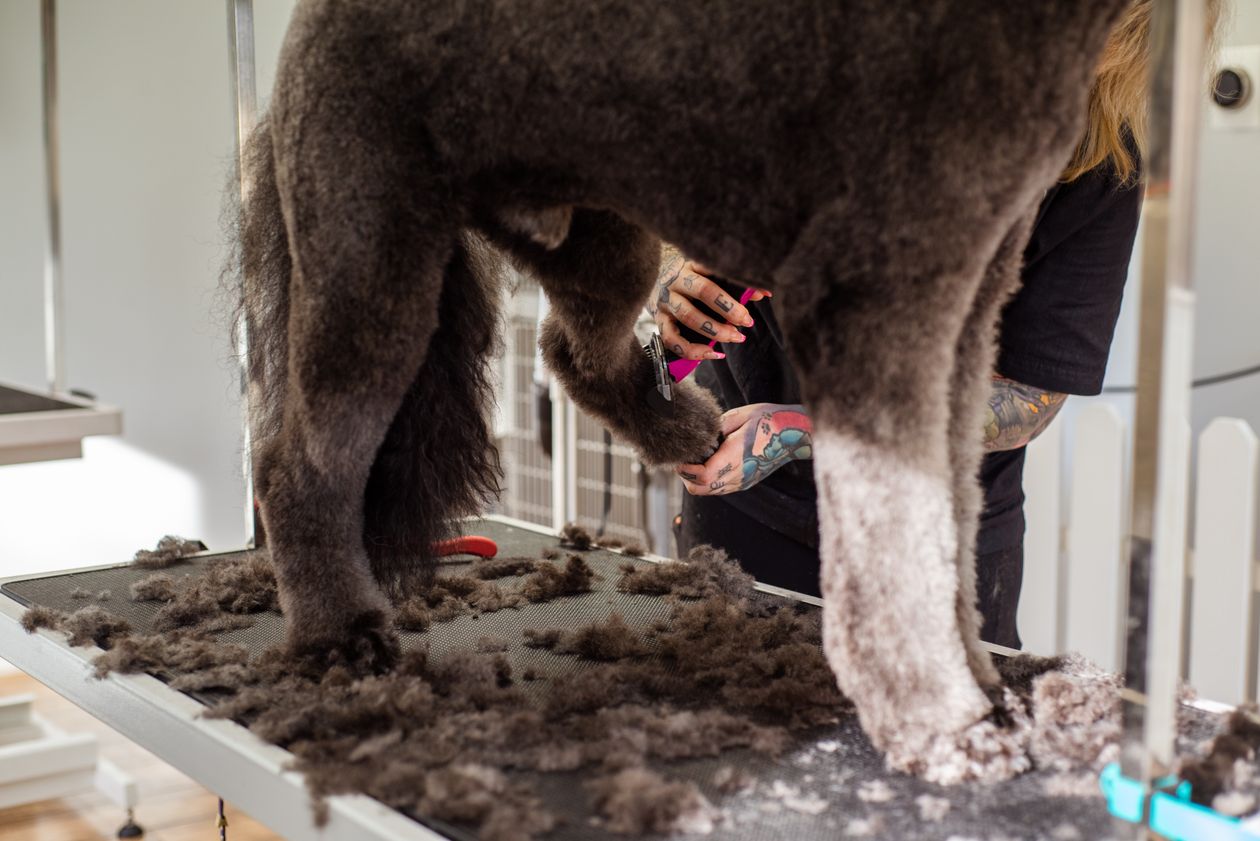
Brush-out or shave-down: how the call gets made
Light tangles and a few small mats in an otherwise maintained coat can usually be worked out, with time and the owner's understanding that the salon may charge for the extra work; at Barks and Bubbles in Concord, matting is one of the stated factors in how a groom is priced. A coat that is matted across the body, tight to the skin, is a different case. Professional groomers follow a simple welfare rule: humanity before vanity. When removal by brushing would mean prolonged pain for the dog, the coat comes off, grows back in weeks, and the dog leaves comfortable. Owners are sometimes upset at the result until they see how the dog acts afterward, which is usually like a dog who has been let out of a too-tight sweater.
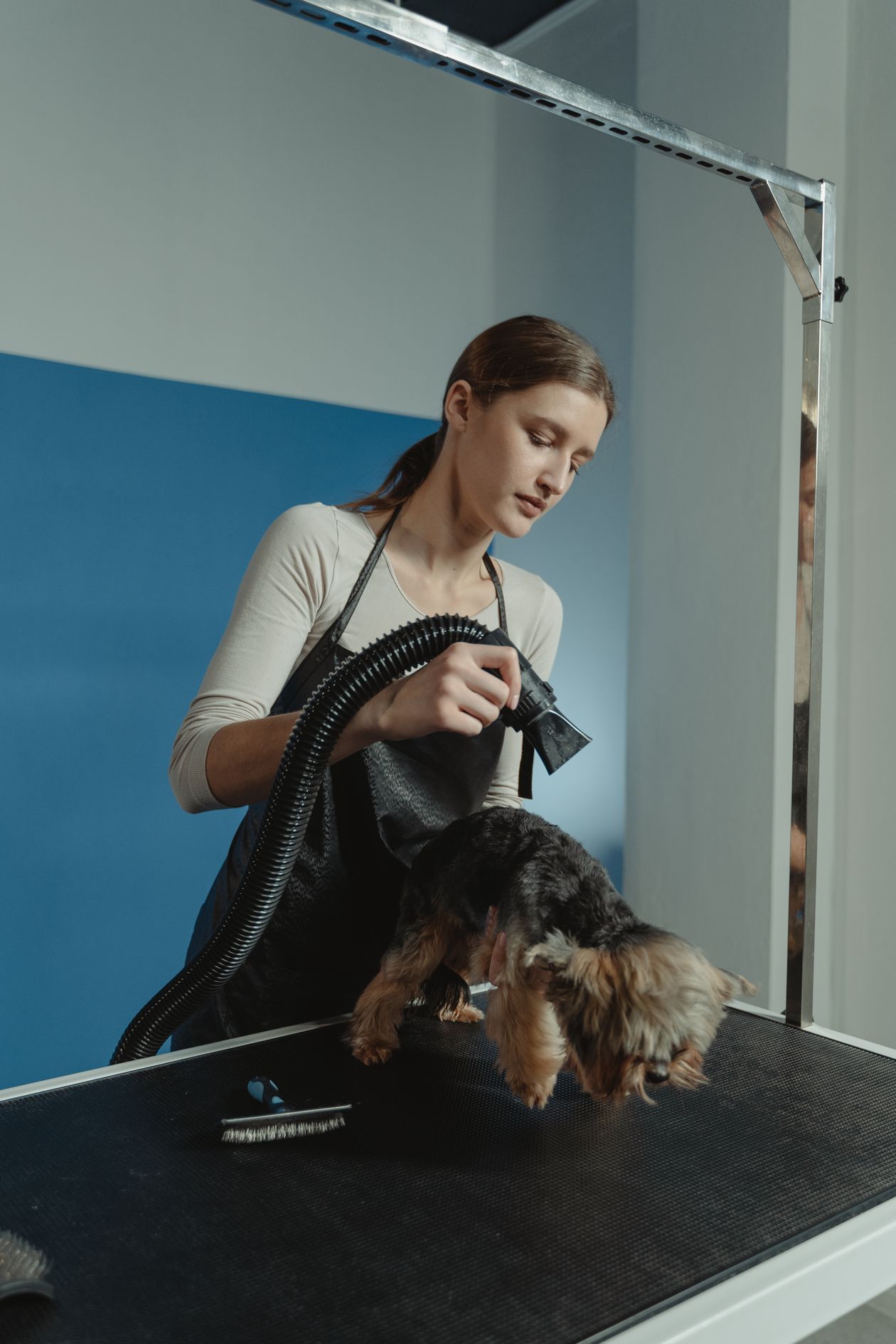
Preventing the next one
The tools are a slicker brush and a metal comb, and the test is the comb: if a comb cannot pass to the skin, brushing has not happened, whatever the surface looks like. Brush in sections, line by line, keep the rebooking interval your coat type actually needs, and never bathe a tangled dog without brushing first.
Checking for trouble spots before they become mats
A thirty-second weekly check prevents most matting emergencies. Run your fingers, not just your eyes, through the friction zones: behind each ear, under the collar, the armpits, the belly where a harness crosses, and the base of the tail. You are feeling for the moment a tangle starts to feel dense and webbed rather than loose. At that stage, five minutes with a slicker brush and comb fixes it. A month later, the same spot is a mat with a groomer's name on it.
After a shave-down: the fresh start
A shave-down feels drastic and is genuinely a reset, so use it as one. The skin under removed mats is often irritated, sometimes with bruising from the mat's pulling, and may be itchy for some days; watch for scratching and ask the groomer or vet about anything that looks angry rather than merely pink. Set the new rebooking date before the coat has grown enough to tangle, buy the comb, and start the weekly check while the coat is short enough to make the habit easy to learn. Dogs who get the fresh start rarely need a second one.
Common questions
Can I cut a mat out with scissors at home?
Please do not. Mats pull skin up into the knot, and scissors at the base of a mat are a leading cause of grooming cuts that need a vet. Clippers or a groomer are the safe removal.
How long does a shaved coat take to grow back?
Most coats regain a workable length in six to ten weeks and full length within a few months. Double coats are the exception and should not have been shaved for mats without a real conversation first.
Will the groomer judge me for a matted dog?
No, they will be pleased you came in. Life gets busy and coats get away from everyone. The only unhelpful move is waiting longer once you know.
Photos in this guide are representative stock images.
← All guides from Barks and Bubbles Salon and Spa← Back to Barks and Bubbles Salon and Spa