Every summer in Concord, the same request arrives at grooming salons: he is so hot, please shave him down. The dog is usually a golden, a shepherd, a husky, or another double-coated breed, panting in the Piedmont humidity while wearing what looks like a winter parka. The instinct is kind. The coat, though, is not a parka. A double coat is a climate system, and removing it makes the dog worse at handling exactly the weather the owner is worried about.
How a double coat handles summer
The soft undercoat traps air, and trapped air insulates against heat as well as cold, keeping the dog's skin closer to its own regulated temperature than the air outside. The longer guard hairs on top shed water and dirt and shield the skin from direct sun. Double-coated dogs are walking around in the shade of their own coat. Shaving removes the shade and the insulation together, exposes skin that has never seen sunlight to sunburn, and frequently disrupts the coat's growth cycle, so regrowth comes back patchy, woolly, and sometimes permanently altered, a condition groomers see regularly on dogs shaved for years.
What actually helps in a Carolina summer
- Brush out the undercoat properly. The dead undercoat packed in the coat is what blocks airflow; removing it is the real summer fix.
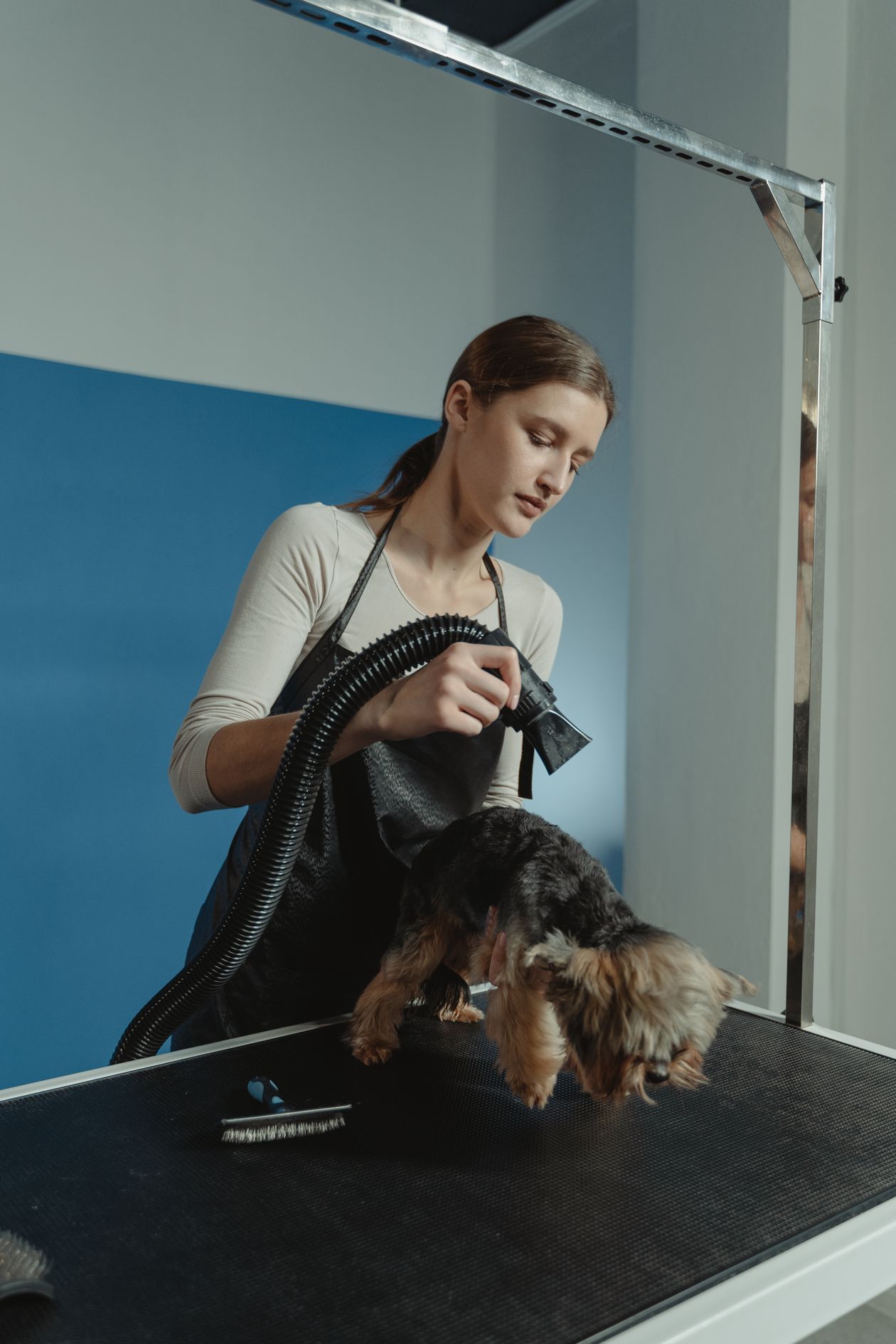
- Book the de-shedding bath and blow-out at the salon. High-velocity drying lifts out undercoat no home brush can match.
- Keep up the regular grooming rhythm, every 6 to 10 weeks for most double coats, shorter in the spring shed.
- Trim only for tidiness: feet, feathering, and sanitary areas, not the body coat.
- Provide shade, water, and indoor breaks. No coat management replaces basic heat sense on a 95-degree Concord afternoon.
- Watch humidity, not just temperature. Dogs cool by panting, and humid air makes panting inefficient, which is why Piedmont summers are harder on dogs than dry heat at the same temperature.
The exceptions groomers will agree to
There are dogs for whom clipping a double coat is the right call: seniors and dogs with health conditions whose coats are matted beyond saving, dogs whose skin conditions need treatment access, and cases a vet directs. Groomers at salons like Barks and Bubbles Salon and Spa will talk through these honestly. What they will push back on is shaving a healthy, maintained double coat purely for summer, because the trade is a temporarily odd-looking dog now for a damaged coat later.
Piedmont hazards that come with the season
Summer grooming is partly about the coat and partly about where the coat goes. Pavement in Concord can reach temperatures that burn paw pads on midday walks, so test it with the back of your hand and move walks to morning and evening grass. Thunderstorm season brings anxiety along with humidity, and a damp, stressed dog who has been hiding under furniture is a dog whose coat check can wait a day, but not a month. Ticks ride in on summer coats and hide best in the same warm spots mats favor, ears, armpits, and groin, which is one more reason the weekly hands-on check matters more from May through September.
Swimming season and the rinse rule
Lake Norman and pool days are the summer version of the mat problem: a double-coated dog who swims and air-dries tangles as the coat dries, and lake water left in a dense undercoat keeps skin damp for hours. Rinse the dog with clean water after swimming, dry as thoroughly as time allows, ideally with airflow, and brush through once dry. Dogs who swim weekly may earn a mid-summer salon bath on that basis alone. It is a small price against the hot spots that damp undercoat breeds by August.
The summer conversation, in the end, is about trusting the equipment the dog was issued. Generations of breeding built that coat to manage weather in both directions, and it does the job well when the dead undercoat is cleared and the skin can breathe. Help it do its work with brushing, blow-outs, shade, and water, and the thick-coated dog panting in your Concord yard will get through August in better shape than the shaved dog down the street.
Common questions
My dog was shaved before and the coat grew back fine. Why the concern?
Some dogs get away with it, especially once. The risk rises with repeated shaving and age, and the damage, when it comes, is slow to reverse. A risk with no benefit is still a bad trade.
Does a shorter summer cut help single-coated breeds?
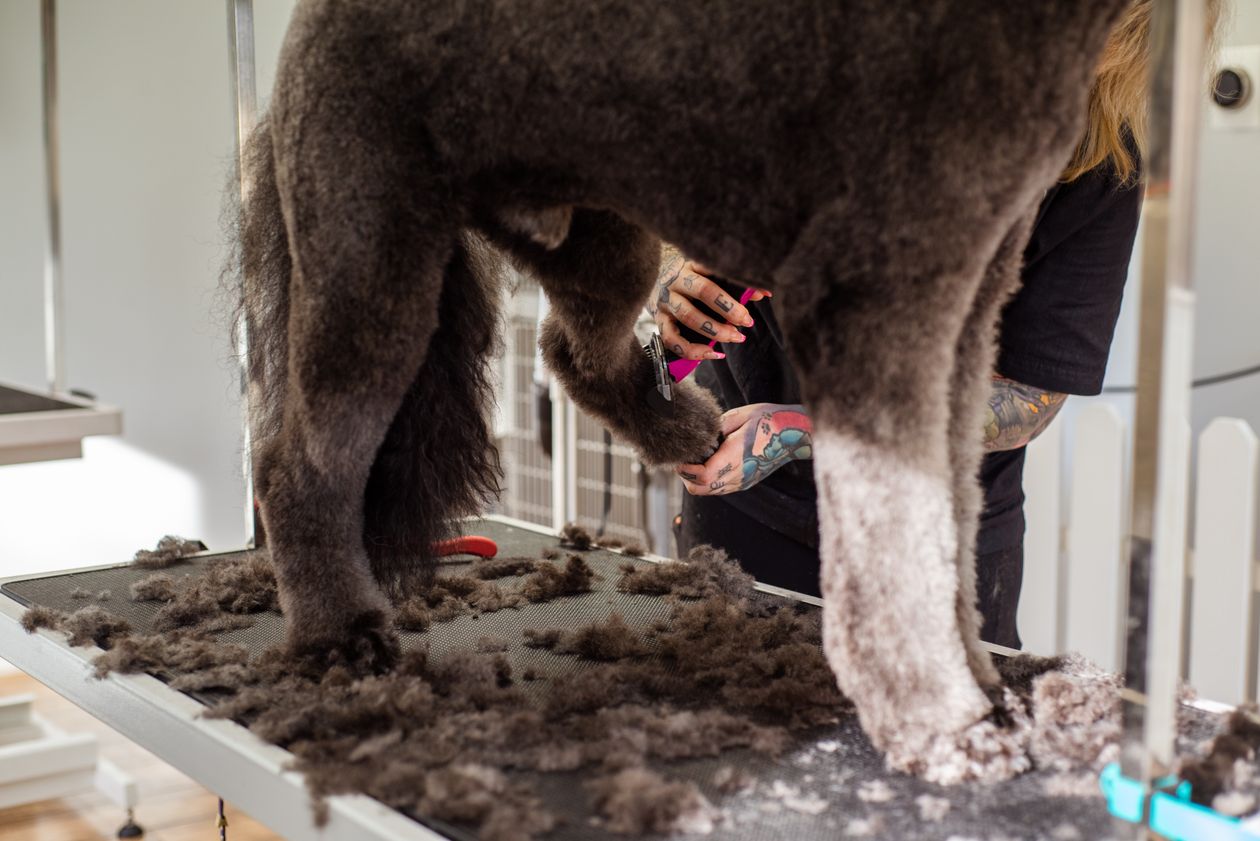
Yes, this is the important distinction. Poodles, doodles, and other single, continuously growing coats can be clipped shorter for summer comfortably. The warning applies specifically to double coats.
How can I tell if my dog has a double coat?
Part the fur: if there is a soft, dense, cottony layer under longer, sleeker guard hairs, that is a double coat. When in doubt, ask your groomer before anyone picks up clippers.
Photos in this guide are representative stock images.
← All guides from Barks and Bubbles Salon and Spa← Back to Barks and Bubbles Salon and Spa